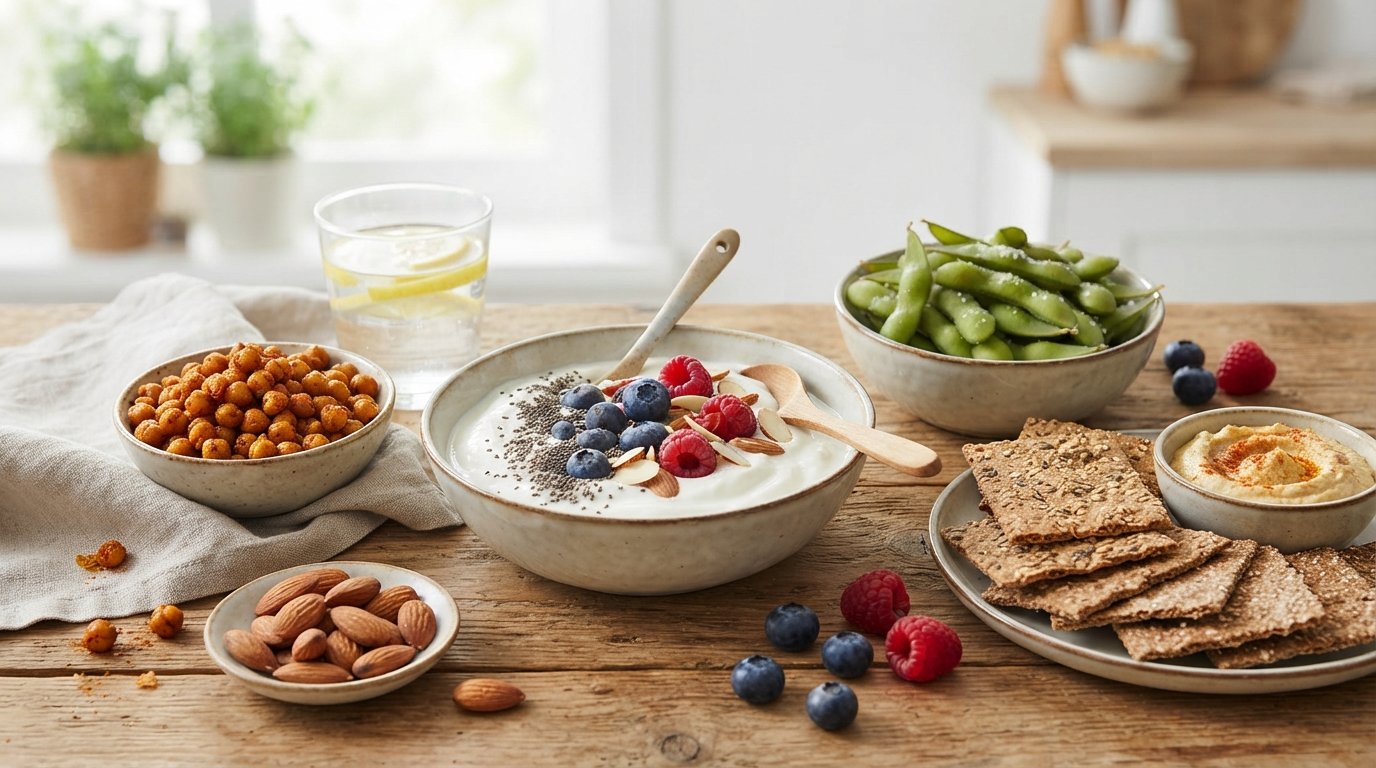
Plant-Based High-Protein Snacks Made From Everyday Foods is designed as a practical guide for readers who want protein-forward snacks that fit ordinary schedules, budgets and kitchens. Rather than presenting one food as universally superior, this article explains how to build, pack, prepare or compare options using clear criteria.
The phrase “plant based high protein snacks” can cover many different foods. What matters is whether the option suits the moment: how it is stored, how easy it is to eat, what else is in the serving, and whether the flavor and texture make it something you will actually choose again.
Protein is only one part of a snack in plant-based high-protein snacks made from everyday foods. Depending on the food and the person, fiber, carbohydrates, fats, sodium, added sugars, allergens, portion size and overall energy can also be relevant. The sections below keep those factors visible without turning this specific guide into medical advice.
What to look for when choosing plant based high protein snacks
A useful way to approach plant based high protein snacks is to start with the actual situation rather than a single nutrition number. Think about beans, lentils, soy foods, nuts, seeds and practical plant-based combinations as a set of levers. You can adjust one of them without rebuilding the entire snack from scratch. That practical standard is more useful than judging foods by a single headline number. This checkpoint belongs to section “What to look for when choosing plant based high protein snacks,” item 1, for plant-based high-protein snacks made from everyday foods. For this topic, a practical example is to pair a concentrated protein food with something that adds the texture or convenience you are missing. The exact pairing can change with appetite, but the logic stays easy to apply to soy foods.
When people search for plant based high protein snacks, the practical question is usually how the snack will fit into a real day. In this part of the guide, the emphasis is on What to look for when choosing plant based high protein snacks. That means considering beans, lentils, soy foods, nuts, seeds and practical plant-based combinations without turning the choice into an overly rigid rule. The goal is not to chase a perfect snack, but to make the next choice easier to repeat. This checkpoint belongs to section “What to look for when choosing plant based high protein snacks,” item 2, for plant-based high-protein snacks made from everyday foods. If you are comparing packaged options, read the serving size first and then scan the ingredient list. For homemade options, think in components: a protein source, an optional produce or whole-grain element, and a flavor component that makes the snack enjoyable.
The most reliable decisions around plant based high protein snacks come from combining label awareness with ordinary kitchen judgment. This is also where personal preference matters: beans, lentils, soy foods, nuts, seeds and practical plant-based combinations may be more important on one day than another, depending on timing and storage. Keeping the decision concrete helps you compare options without turning normal eating into a complicated calculation. This checkpoint belongs to section “What to look for when choosing plant based high protein snacks,” item 3, for plant-based high-protein snacks made from everyday foods. Preparation time deserves attention too. A snack that takes twenty minutes may be fine on a weekend, while a workday option might need to be assembled in two minutes or portioned the night before. That difference is especially relevant to grain pairings.
For plant-based high-protein snacks made from everyday foods, context matters because a snack that works at home can be inconvenient somewhere else. Think about beans, lentils, soy foods, nuts, seeds and practical plant-based combinations as a set of levers. You can adjust one of them without rebuilding the entire snack from scratch. Keeping the decision concrete helps you compare options without turning normal eating into a complicated calculation. This checkpoint belongs to section “What to look for when choosing plant based high protein snacks,” item 4, for plant-based high-protein snacks made from everyday foods. Taste and texture are not minor details. Creamy, crisp, chewy and crunchy foods create very different eating experiences, so alternating textures can make a routine feel less repetitive even when the underlying protein sources stay familiar.
Instead of treating plant based high protein snacks as one fixed formula, it helps to compare a few workable patterns. In this part of the guide, the emphasis is on What to look for when choosing plant based high protein snacks. That means considering beans, lentils, soy foods, nuts, seeds and practical plant-based combinations without turning the choice into an overly rigid rule. Used this way, the snack becomes a flexible part of a routine instead of a special project. This checkpoint belongs to section “What to look for when choosing plant based high protein snacks,” item 5, for plant-based high-protein snacks made from everyday foods. For people managing a budget, compare cost per usable serving rather than package price alone. A larger package can be economical when it is eaten before it spoils; a smaller pack can be the better value when it prevents waste or is easier to carry.
A useful way to approach plant based high protein snacks is to start with the actual situation rather than a single nutrition number. A small amount of planning around beans, lentils, soy foods, nuts, seeds and practical plant-based combinations often prevents the common problem of having a protein-rich option that is awkward to eat when you actually need it. A simple system also makes it easier to notice which combinations you genuinely enjoy and will buy or prepare again. This checkpoint belongs to section “What to look for when choosing plant based high protein snacks,” item 6, for plant-based high-protein snacks made from everyday foods. Food safety also depends on the specific ingredient. Perishable dairy, eggs, cooked meat and prepared mixtures need appropriate temperature control, while sealed shelf-stable foods have different handling needs. Follow package directions and local food-safety guidance when storage is uncertain.
A practical framework for soy foods
A useful way to approach plant based high protein snacks is to start with the actual situation rather than a single nutrition number. This is also where personal preference matters: beans, lentils, soy foods, nuts, seeds and practical plant-based combinations may be more important on one day than another, depending on timing and storage. That practical standard is more useful than judging foods by a single headline number. This checkpoint belongs to section “A practical framework for soy foods,” item 1, for plant-based high-protein snacks made from everyday foods. If you are comparing packaged options, read the serving size first and then scan the ingredient list. For homemade options, think in components: a protein source, an optional produce or whole-grain element, and a flavor component that makes the snack enjoyable.
When people search for plant based high protein snacks, the practical question is usually how the snack will fit into a real day. Think about beans, lentils, soy foods, nuts, seeds and practical plant-based combinations as a set of levers. You can adjust one of them without rebuilding the entire snack from scratch. A simple system also makes it easier to notice which combinations you genuinely enjoy and will buy or prepare again. This checkpoint belongs to section “A practical framework for soy foods,” item 2, for plant-based high-protein snacks made from everyday foods. Preparation time deserves attention too. A snack that takes twenty minutes may be fine on a weekend, while a workday option might need to be assembled in two minutes or portioned the night before. That difference is especially relevant to nuts and seeds.
The most reliable decisions around plant based high protein snacks come from combining label awareness with ordinary kitchen judgment. In this part of the guide, the emphasis is on A practical framework for soy foods. That means considering beans, lentils, soy foods, nuts, seeds and practical plant-based combinations without turning the choice into an overly rigid rule. A simple system also makes it easier to notice which combinations you genuinely enjoy and will buy or prepare again. This checkpoint belongs to section “A practical framework for soy foods,” item 3, for plant-based high-protein snacks made from everyday foods. Taste and texture are not minor details. Creamy, crisp, chewy and crunchy foods create very different eating experiences, so alternating textures can make a routine feel less repetitive even when the underlying protein sources stay familiar.
For plant-based high-protein snacks made from everyday foods, context matters because a snack that works at home can be inconvenient somewhere else. Think about beans, lentils, soy foods, nuts, seeds and practical plant-based combinations as a set of levers. You can adjust one of them without rebuilding the entire snack from scratch. The goal is not to chase a perfect snack, but to make the next choice easier to repeat. This checkpoint belongs to section “A practical framework for soy foods,” item 4, for plant-based high-protein snacks made from everyday foods. For people managing a budget, compare cost per usable serving rather than package price alone. A larger package can be economical when it is eaten before it spoils; a smaller pack can be the better value when it prevents waste or is easier to carry.
Instead of treating plant based high protein snacks as one fixed formula, it helps to compare a few workable patterns. A small amount of planning around beans, lentils, soy foods, nuts, seeds and practical plant-based combinations often prevents the common problem of having a protein-rich option that is awkward to eat when you actually need it. A simple system also makes it easier to notice which combinations you genuinely enjoy and will buy or prepare again. This checkpoint belongs to section “A practical framework for soy foods,” item 5, for plant-based high-protein snacks made from everyday foods. Food safety also depends on the specific ingredient. Perishable dairy, eggs, cooked meat and prepared mixtures need appropriate temperature control, while sealed shelf-stable foods have different handling needs. Follow package directions and local food-safety guidance when storage is uncertain.
A useful way to approach plant based high protein snacks is to start with the actual situation rather than a single nutrition number. The details worth checking include beans, lentils, soy foods, nuts, seeds and practical plant-based combinations. These factors can change how satisfying, portable or easy to prepare a snack feels. The goal is not to chase a perfect snack, but to make the next choice easier to repeat. This checkpoint belongs to section “A practical framework for soy foods,” item 6, for plant-based high-protein snacks made from everyday foods. For this topic, a practical example is to pair a concentrated protein food with something that adds the texture or convenience you are missing. The exact pairing can change with appetite, but the logic stays easy to apply to soy foods.
- Legumes: use it as a checkpoint when evaluating plant based high protein snacks for your own routine.
- Nuts and seeds: use it as a checkpoint when evaluating plant based high protein snacks for your own routine.
- Grain pairings: use it as a checkpoint when evaluating plant based high protein snacks for your own routine.
- Plant-based prep: use it as a checkpoint when evaluating plant based high protein snacks for your own routine.
- Soy foods: use it as a checkpoint when evaluating plant based high protein snacks for your own routine.
How legumes changes the choice
A useful way to approach plant based high protein snacks is to start with the actual situation rather than a single nutrition number. Think about beans, lentils, soy foods, nuts, seeds and practical plant-based combinations as a set of levers. You can adjust one of them without rebuilding the entire snack from scratch. Keeping the decision concrete helps you compare options without turning normal eating into a complicated calculation. This checkpoint belongs to section “How legumes changes the choice,” item 1, for plant-based high-protein snacks made from everyday foods. Preparation time deserves attention too. A snack that takes twenty minutes may be fine on a weekend, while a workday option might need to be assembled in two minutes or portioned the night before. That difference is especially relevant to legumes.
When people search for plant based high protein snacks, the practical question is usually how the snack will fit into a real day. Think about beans, lentils, soy foods, nuts, seeds and practical plant-based combinations as a set of levers. You can adjust one of them without rebuilding the entire snack from scratch. The goal is not to chase a perfect snack, but to make the next choice easier to repeat. This checkpoint belongs to section “How legumes changes the choice,” item 2, for plant-based high-protein snacks made from everyday foods. Taste and texture are not minor details. Creamy, crisp, chewy and crunchy foods create very different eating experiences, so alternating textures can make a routine feel less repetitive even when the underlying protein sources stay familiar.
The most reliable decisions around plant based high protein snacks come from combining label awareness with ordinary kitchen judgment. The details worth checking include beans, lentils, soy foods, nuts, seeds and practical plant-based combinations. These factors can change how satisfying, portable or easy to prepare a snack feels. The goal is not to chase a perfect snack, but to make the next choice easier to repeat. This checkpoint belongs to section “How legumes changes the choice,” item 3, for plant-based high-protein snacks made from everyday foods. For people managing a budget, compare cost per usable serving rather than package price alone. A larger package can be economical when it is eaten before it spoils; a smaller pack can be the better value when it prevents waste or is easier to carry.
For plant-based high-protein snacks made from everyday foods, context matters because a snack that works at home can be inconvenient somewhere else. The details worth checking include beans, lentils, soy foods, nuts, seeds and practical plant-based combinations. These factors can change how satisfying, portable or easy to prepare a snack feels. That practical standard is more useful than judging foods by a single headline number. This checkpoint belongs to section “How legumes changes the choice,” item 4, for plant-based high-protein snacks made from everyday foods. Food safety also depends on the specific ingredient. Perishable dairy, eggs, cooked meat and prepared mixtures need appropriate temperature control, while sealed shelf-stable foods have different handling needs. Follow package directions and local food-safety guidance when storage is uncertain.
Instead of treating plant based high protein snacks as one fixed formula, it helps to compare a few workable patterns. The details worth checking include beans, lentils, soy foods, nuts, seeds and practical plant-based combinations. These factors can change how satisfying, portable or easy to prepare a snack feels. That practical standard is more useful than judging foods by a single headline number. This checkpoint belongs to section “How legumes changes the choice,” item 5, for plant-based high-protein snacks made from everyday foods. For this topic, a practical example is to pair a concentrated protein food with something that adds the texture or convenience you are missing. The exact pairing can change with appetite, but the logic stays easy to apply to plant-based prep.
A useful way to approach plant based high protein snacks is to start with the actual situation rather than a single nutrition number. A small amount of planning around beans, lentils, soy foods, nuts, seeds and practical plant-based combinations often prevents the common problem of having a protein-rich option that is awkward to eat when you actually need it. Keeping the decision concrete helps you compare options without turning normal eating into a complicated calculation. This checkpoint belongs to section “How legumes changes the choice,” item 6, for plant-based high-protein snacks made from everyday foods. If you are comparing packaged options, read the serving size first and then scan the ingredient list. For homemade options, think in components: a protein source, an optional produce or whole-grain element, and a flavor component that makes the snack enjoyable.
Planning around nuts and seeds
A useful way to approach plant based high protein snacks is to start with the actual situation rather than a single nutrition number. This is also where personal preference matters: beans, lentils, soy foods, nuts, seeds and practical plant-based combinations may be more important on one day than another, depending on timing and storage. Keeping the decision concrete helps you compare options without turning normal eating into a complicated calculation. This checkpoint belongs to section “Planning around nuts and seeds,” item 1, for plant-based high-protein snacks made from everyday foods. Taste and texture are not minor details. Creamy, crisp, chewy and crunchy foods create very different eating experiences, so alternating textures can make a routine feel less repetitive even when the underlying protein sources stay familiar.
When people search for plant based high protein snacks, the practical question is usually how the snack will fit into a real day. This is also where personal preference matters: beans, lentils, soy foods, nuts, seeds and practical plant-based combinations may be more important on one day than another, depending on timing and storage. Keeping the decision concrete helps you compare options without turning normal eating into a complicated calculation. This checkpoint belongs to section “Planning around nuts and seeds,” item 2, for plant-based high-protein snacks made from everyday foods. For people managing a budget, compare cost per usable serving rather than package price alone. A larger package can be economical when it is eaten before it spoils; a smaller pack can be the better value when it prevents waste or is easier to carry.
The most reliable decisions around plant based high protein snacks come from combining label awareness with ordinary kitchen judgment. This is also where personal preference matters: beans, lentils, soy foods, nuts, seeds and practical plant-based combinations may be more important on one day than another, depending on timing and storage. A simple system also makes it easier to notice which combinations you genuinely enjoy and will buy or prepare again. This checkpoint belongs to section “Planning around nuts and seeds,” item 3, for plant-based high-protein snacks made from everyday foods. Food safety also depends on the specific ingredient. Perishable dairy, eggs, cooked meat and prepared mixtures need appropriate temperature control, while sealed shelf-stable foods have different handling needs. Follow package directions and local food-safety guidance when storage is uncertain.
For plant-based high-protein snacks made from everyday foods, context matters because a snack that works at home can be inconvenient somewhere else. Think about beans, lentils, soy foods, nuts, seeds and practical plant-based combinations as a set of levers. You can adjust one of them without rebuilding the entire snack from scratch. Used this way, the snack becomes a flexible part of a routine instead of a special project. This checkpoint belongs to section “Planning around nuts and seeds,” item 4, for plant-based high-protein snacks made from everyday foods. For this topic, a practical example is to pair a concentrated protein food with something that adds the texture or convenience you are missing. The exact pairing can change with appetite, but the logic stays easy to apply to grain pairings.
Instead of treating plant based high protein snacks as one fixed formula, it helps to compare a few workable patterns. A small amount of planning around beans, lentils, soy foods, nuts, seeds and practical plant-based combinations often prevents the common problem of having a protein-rich option that is awkward to eat when you actually need it. The goal is not to chase a perfect snack, but to make the next choice easier to repeat. This checkpoint belongs to section “Planning around nuts and seeds,” item 5, for plant-based high-protein snacks made from everyday foods. If you are comparing packaged options, read the serving size first and then scan the ingredient list. For homemade options, think in components: a protein source, an optional produce or whole-grain element, and a flavor component that makes the snack enjoyable.
A useful way to approach plant based high protein snacks is to start with the actual situation rather than a single nutrition number. This is also where personal preference matters: beans, lentils, soy foods, nuts, seeds and practical plant-based combinations may be more important on one day than another, depending on timing and storage. A simple system also makes it easier to notice which combinations you genuinely enjoy and will buy or prepare again. This checkpoint belongs to section “Planning around nuts and seeds,” item 6, for plant-based high-protein snacks made from everyday foods. Preparation time deserves attention too. A snack that takes twenty minutes may be fine on a weekend, while a workday option might need to be assembled in two minutes or portioned the night before. That difference is especially relevant to legumes.
Making grain pairings easier in real life
A useful way to approach plant based high protein snacks is to start with the actual situation rather than a single nutrition number. Think about beans, lentils, soy foods, nuts, seeds and practical plant-based combinations as a set of levers. You can adjust one of them without rebuilding the entire snack from scratch. Keeping the decision concrete helps you compare options without turning normal eating into a complicated calculation. This checkpoint belongs to section “Making grain pairings easier in real life,” item 1, for plant-based high-protein snacks made from everyday foods. For people managing a budget, compare cost per usable serving rather than package price alone. A larger package can be economical when it is eaten before it spoils; a smaller pack can be the better value when it prevents waste or is easier to carry.
When people search for plant based high protein snacks, the practical question is usually how the snack will fit into a real day. A small amount of planning around beans, lentils, soy foods, nuts, seeds and practical plant-based combinations often prevents the common problem of having a protein-rich option that is awkward to eat when you actually need it. Keeping the decision concrete helps you compare options without turning normal eating into a complicated calculation. This checkpoint belongs to section “Making grain pairings easier in real life,” item 2, for plant-based high-protein snacks made from everyday foods. Food safety also depends on the specific ingredient. Perishable dairy, eggs, cooked meat and prepared mixtures need appropriate temperature control, while sealed shelf-stable foods have different handling needs. Follow package directions and local food-safety guidance when storage is uncertain.
The most reliable decisions around plant based high protein snacks come from combining label awareness with ordinary kitchen judgment. This is also where personal preference matters: beans, lentils, soy foods, nuts, seeds and practical plant-based combinations may be more important on one day than another, depending on timing and storage. A simple system also makes it easier to notice which combinations you genuinely enjoy and will buy or prepare again. This checkpoint belongs to section “Making grain pairings easier in real life,” item 3, for plant-based high-protein snacks made from everyday foods. For this topic, a practical example is to pair a concentrated protein food with something that adds the texture or convenience you are missing. The exact pairing can change with appetite, but the logic stays easy to apply to nuts and seeds.
For plant-based high-protein snacks made from everyday foods, context matters because a snack that works at home can be inconvenient somewhere else. A small amount of planning around beans, lentils, soy foods, nuts, seeds and practical plant-based combinations often prevents the common problem of having a protein-rich option that is awkward to eat when you actually need it. Keeping the decision concrete helps you compare options without turning normal eating into a complicated calculation. This checkpoint belongs to section “Making grain pairings easier in real life,” item 4, for plant-based high-protein snacks made from everyday foods. If you are comparing packaged options, read the serving size first and then scan the ingredient list. For homemade options, think in components: a protein source, an optional produce or whole-grain element, and a flavor component that makes the snack enjoyable.
Instead of treating plant based high protein snacks as one fixed formula, it helps to compare a few workable patterns. The details worth checking include beans, lentils, soy foods, nuts, seeds and practical plant-based combinations. These factors can change how satisfying, portable or easy to prepare a snack feels. A simple system also makes it easier to notice which combinations you genuinely enjoy and will buy or prepare again. This checkpoint belongs to section “Making grain pairings easier in real life,” item 5, for plant-based high-protein snacks made from everyday foods. Preparation time deserves attention too. A snack that takes twenty minutes may be fine on a weekend, while a workday option might need to be assembled in two minutes or portioned the night before. That difference is especially relevant to soy foods.
A useful way to approach plant based high protein snacks is to start with the actual situation rather than a single nutrition number. The details worth checking include beans, lentils, soy foods, nuts, seeds and practical plant-based combinations. These factors can change how satisfying, portable or easy to prepare a snack feels. Used this way, the snack becomes a flexible part of a routine instead of a special project. This checkpoint belongs to section “Making grain pairings easier in real life,” item 6, for plant-based high-protein snacks made from everyday foods. Taste and texture are not minor details. Creamy, crisp, chewy and crunchy foods create very different eating experiences, so alternating textures can make a routine feel less repetitive even when the underlying protein sources stay familiar.
- Plant-based prep: use it as a checkpoint when evaluating plant based high protein snacks for your own routine.
- Soy foods: use it as a checkpoint when evaluating plant based high protein snacks for your own routine.
- Legumes: use it as a checkpoint when evaluating plant based high protein snacks for your own routine.
Common mistakes with plant-based prep
A useful way to approach plant based high protein snacks is to start with the actual situation rather than a single nutrition number. Think about beans, lentils, soy foods, nuts, seeds and practical plant-based combinations as a set of levers. You can adjust one of them without rebuilding the entire snack from scratch. That practical standard is more useful than judging foods by a single headline number. This checkpoint belongs to section “Common mistakes with plant-based prep,” item 1, for plant-based high-protein snacks made from everyday foods. Food safety also depends on the specific ingredient. Perishable dairy, eggs, cooked meat and prepared mixtures need appropriate temperature control, while sealed shelf-stable foods have different handling needs. Follow package directions and local food-safety guidance when storage is uncertain.
When people search for plant based high protein snacks, the practical question is usually how the snack will fit into a real day. The details worth checking include beans, lentils, soy foods, nuts, seeds and practical plant-based combinations. These factors can change how satisfying, portable or easy to prepare a snack feels. Keeping the decision concrete helps you compare options without turning normal eating into a complicated calculation. This checkpoint belongs to section “Common mistakes with plant-based prep,” item 2, for plant-based high-protein snacks made from everyday foods. For this topic, a practical example is to pair a concentrated protein food with something that adds the texture or convenience you are missing. The exact pairing can change with appetite, but the logic stays easy to apply to legumes.
The most reliable decisions around plant based high protein snacks come from combining label awareness with ordinary kitchen judgment. This is also where personal preference matters: beans, lentils, soy foods, nuts, seeds and practical plant-based combinations may be more important on one day than another, depending on timing and storage. A simple system also makes it easier to notice which combinations you genuinely enjoy and will buy or prepare again. This checkpoint belongs to section “Common mistakes with plant-based prep,” item 3, for plant-based high-protein snacks made from everyday foods. If you are comparing packaged options, read the serving size first and then scan the ingredient list. For homemade options, think in components: a protein source, an optional produce or whole-grain element, and a flavor component that makes the snack enjoyable.
For plant-based high-protein snacks made from everyday foods, context matters because a snack that works at home can be inconvenient somewhere else. A small amount of planning around beans, lentils, soy foods, nuts, seeds and practical plant-based combinations often prevents the common problem of having a protein-rich option that is awkward to eat when you actually need it. The goal is not to chase a perfect snack, but to make the next choice easier to repeat. This checkpoint belongs to section “Common mistakes with plant-based prep,” item 4, for plant-based high-protein snacks made from everyday foods. Preparation time deserves attention too. A snack that takes twenty minutes may be fine on a weekend, while a workday option might need to be assembled in two minutes or portioned the night before. That difference is especially relevant to plant-based prep.
Instead of treating plant based high protein snacks as one fixed formula, it helps to compare a few workable patterns. In this part of the guide, the emphasis is on Common mistakes with plant-based prep. That means considering beans, lentils, soy foods, nuts, seeds and practical plant-based combinations without turning the choice into an overly rigid rule. A simple system also makes it easier to notice which combinations you genuinely enjoy and will buy or prepare again. This checkpoint belongs to section “Common mistakes with plant-based prep,” item 5, for plant-based high-protein snacks made from everyday foods. Taste and texture are not minor details. Creamy, crisp, chewy and crunchy foods create very different eating experiences, so alternating textures can make a routine feel less repetitive even when the underlying protein sources stay familiar.
A useful way to approach plant based high protein snacks is to start with the actual situation rather than a single nutrition number. This is also where personal preference matters: beans, lentils, soy foods, nuts, seeds and practical plant-based combinations may be more important on one day than another, depending on timing and storage. A simple system also makes it easier to notice which combinations you genuinely enjoy and will buy or prepare again. This checkpoint belongs to section “Common mistakes with plant-based prep,” item 6, for plant-based high-protein snacks made from everyday foods. For people managing a budget, compare cost per usable serving rather than package price alone. A larger package can be economical when it is eaten before it spoils; a smaller pack can be the better value when it prevents waste or is easier to carry.
Portion, texture and satisfaction
A useful way to approach plant based high protein snacks is to start with the actual situation rather than a single nutrition number. This is also where personal preference matters: beans, lentils, soy foods, nuts, seeds and practical plant-based combinations may be more important on one day than another, depending on timing and storage. Used this way, the snack becomes a flexible part of a routine instead of a special project. This checkpoint belongs to section “Portion, texture and satisfaction,” item 1, for plant-based high-protein snacks made from everyday foods. For this topic, a practical example is to pair a concentrated protein food with something that adds the texture or convenience you are missing. The exact pairing can change with appetite, but the logic stays easy to apply to soy foods.
When people search for plant based high protein snacks, the practical question is usually how the snack will fit into a real day. Think about beans, lentils, soy foods, nuts, seeds and practical plant-based combinations as a set of levers. You can adjust one of them without rebuilding the entire snack from scratch. Keeping the decision concrete helps you compare options without turning normal eating into a complicated calculation. This checkpoint belongs to section “Portion, texture and satisfaction,” item 2, for plant-based high-protein snacks made from everyday foods. If you are comparing packaged options, read the serving size first and then scan the ingredient list. For homemade options, think in components: a protein source, an optional produce or whole-grain element, and a flavor component that makes the snack enjoyable.
The most reliable decisions around plant based high protein snacks come from combining label awareness with ordinary kitchen judgment. In this part of the guide, the emphasis is on Portion, texture and satisfaction. That means considering beans, lentils, soy foods, nuts, seeds and practical plant-based combinations without turning the choice into an overly rigid rule. The goal is not to chase a perfect snack, but to make the next choice easier to repeat. This checkpoint belongs to section “Portion, texture and satisfaction,” item 3, for plant-based high-protein snacks made from everyday foods. Preparation time deserves attention too. A snack that takes twenty minutes may be fine on a weekend, while a workday option might need to be assembled in two minutes or portioned the night before. That difference is especially relevant to grain pairings.
For plant-based high-protein snacks made from everyday foods, context matters because a snack that works at home can be inconvenient somewhere else. Think about beans, lentils, soy foods, nuts, seeds and practical plant-based combinations as a set of levers. You can adjust one of them without rebuilding the entire snack from scratch. Keeping the decision concrete helps you compare options without turning normal eating into a complicated calculation. This checkpoint belongs to section “Portion, texture and satisfaction,” item 4, for plant-based high-protein snacks made from everyday foods. Taste and texture are not minor details. Creamy, crisp, chewy and crunchy foods create very different eating experiences, so alternating textures can make a routine feel less repetitive even when the underlying protein sources stay familiar.
Instead of treating plant based high protein snacks as one fixed formula, it helps to compare a few workable patterns. Think about beans, lentils, soy foods, nuts, seeds and practical plant-based combinations as a set of levers. You can adjust one of them without rebuilding the entire snack from scratch. A simple system also makes it easier to notice which combinations you genuinely enjoy and will buy or prepare again. This checkpoint belongs to section “Portion, texture and satisfaction,” item 5, for plant-based high-protein snacks made from everyday foods. For people managing a budget, compare cost per usable serving rather than package price alone. A larger package can be economical when it is eaten before it spoils; a smaller pack can be the better value when it prevents waste or is easier to carry.
A useful way to approach plant based high protein snacks is to start with the actual situation rather than a single nutrition number. In this part of the guide, the emphasis is on Portion, texture and satisfaction. That means considering beans, lentils, soy foods, nuts, seeds and practical plant-based combinations without turning the choice into an overly rigid rule. Keeping the decision concrete helps you compare options without turning normal eating into a complicated calculation. This checkpoint belongs to section “Portion, texture and satisfaction,” item 6, for plant-based high-protein snacks made from everyday foods. Food safety also depends on the specific ingredient. Perishable dairy, eggs, cooked meat and prepared mixtures need appropriate temperature control, while sealed shelf-stable foods have different handling needs. Follow package directions and local food-safety guidance when storage is uncertain.
Storage, prep and food-safety habits
A useful way to approach plant based high protein snacks is to start with the actual situation rather than a single nutrition number. The details worth checking include beans, lentils, soy foods, nuts, seeds and practical plant-based combinations. These factors can change how satisfying, portable or easy to prepare a snack feels. Keeping the decision concrete helps you compare options without turning normal eating into a complicated calculation. This checkpoint belongs to section “Storage, prep and food-safety habits,” item 1, for plant-based high-protein snacks made from everyday foods. If you are comparing packaged options, read the serving size first and then scan the ingredient list. For homemade options, think in components: a protein source, an optional produce or whole-grain element, and a flavor component that makes the snack enjoyable.
When people search for plant based high protein snacks, the practical question is usually how the snack will fit into a real day. The details worth checking include beans, lentils, soy foods, nuts, seeds and practical plant-based combinations. These factors can change how satisfying, portable or easy to prepare a snack feels. The goal is not to chase a perfect snack, but to make the next choice easier to repeat. This checkpoint belongs to section “Storage, prep and food-safety habits,” item 2, for plant-based high-protein snacks made from everyday foods. Preparation time deserves attention too. A snack that takes twenty minutes may be fine on a weekend, while a workday option might need to be assembled in two minutes or portioned the night before. That difference is especially relevant to nuts and seeds.
The most reliable decisions around plant based high protein snacks come from combining label awareness with ordinary kitchen judgment. This is also where personal preference matters: beans, lentils, soy foods, nuts, seeds and practical plant-based combinations may be more important on one day than another, depending on timing and storage. Used this way, the snack becomes a flexible part of a routine instead of a special project. This checkpoint belongs to section “Storage, prep and food-safety habits,” item 3, for plant-based high-protein snacks made from everyday foods. Taste and texture are not minor details. Creamy, crisp, chewy and crunchy foods create very different eating experiences, so alternating textures can make a routine feel less repetitive even when the underlying protein sources stay familiar.
For plant-based high-protein snacks made from everyday foods, context matters because a snack that works at home can be inconvenient somewhere else. A small amount of planning around beans, lentils, soy foods, nuts, seeds and practical plant-based combinations often prevents the common problem of having a protein-rich option that is awkward to eat when you actually need it. Keeping the decision concrete helps you compare options without turning normal eating into a complicated calculation. This checkpoint belongs to section “Storage, prep and food-safety habits,” item 4, for plant-based high-protein snacks made from everyday foods. For people managing a budget, compare cost per usable serving rather than package price alone. A larger package can be economical when it is eaten before it spoils; a smaller pack can be the better value when it prevents waste or is easier to carry.
Instead of treating plant based high protein snacks as one fixed formula, it helps to compare a few workable patterns. This is also where personal preference matters: beans, lentils, soy foods, nuts, seeds and practical plant-based combinations may be more important on one day than another, depending on timing and storage. A simple system also makes it easier to notice which combinations you genuinely enjoy and will buy or prepare again. This checkpoint belongs to section “Storage, prep and food-safety habits,” item 5, for plant-based high-protein snacks made from everyday foods. Food safety also depends on the specific ingredient. Perishable dairy, eggs, cooked meat and prepared mixtures need appropriate temperature control, while sealed shelf-stable foods have different handling needs. Follow package directions and local food-safety guidance when storage is uncertain.
A useful way to approach plant based high protein snacks is to start with the actual situation rather than a single nutrition number. A small amount of planning around beans, lentils, soy foods, nuts, seeds and practical plant-based combinations often prevents the common problem of having a protein-rich option that is awkward to eat when you actually need it. A simple system also makes it easier to notice which combinations you genuinely enjoy and will buy or prepare again. This checkpoint belongs to section “Storage, prep and food-safety habits,” item 6, for plant-based high-protein snacks made from everyday foods. For this topic, a practical example is to pair a concentrated protein food with something that adds the texture or convenience you are missing. The exact pairing can change with appetite, but the logic stays easy to apply to soy foods.
How to compare labels without overcomplicating it
A useful way to approach plant based high protein snacks is to start with the actual situation rather than a single nutrition number. This is also where personal preference matters: beans, lentils, soy foods, nuts, seeds and practical plant-based combinations may be more important on one day than another, depending on timing and storage. A simple system also makes it easier to notice which combinations you genuinely enjoy and will buy or prepare again. This checkpoint belongs to section “How to compare labels without overcomplicating it,” item 1, for plant-based high-protein snacks made from everyday foods. Preparation time deserves attention too. A snack that takes twenty minutes may be fine on a weekend, while a workday option might need to be assembled in two minutes or portioned the night before. That difference is especially relevant to legumes.
When people search for plant based high protein snacks, the practical question is usually how the snack will fit into a real day. Think about beans, lentils, soy foods, nuts, seeds and practical plant-based combinations as a set of levers. You can adjust one of them without rebuilding the entire snack from scratch. The goal is not to chase a perfect snack, but to make the next choice easier to repeat. This checkpoint belongs to section “How to compare labels without overcomplicating it,” item 2, for plant-based high-protein snacks made from everyday foods. Taste and texture are not minor details. Creamy, crisp, chewy and crunchy foods create very different eating experiences, so alternating textures can make a routine feel less repetitive even when the underlying protein sources stay familiar.
The most reliable decisions around plant based high protein snacks come from combining label awareness with ordinary kitchen judgment. This is also where personal preference matters: beans, lentils, soy foods, nuts, seeds and practical plant-based combinations may be more important on one day than another, depending on timing and storage. A simple system also makes it easier to notice which combinations you genuinely enjoy and will buy or prepare again. This checkpoint belongs to section “How to compare labels without overcomplicating it,” item 3, for plant-based high-protein snacks made from everyday foods. For people managing a budget, compare cost per usable serving rather than package price alone. A larger package can be economical when it is eaten before it spoils; a smaller pack can be the better value when it prevents waste or is easier to carry.
For plant-based high-protein snacks made from everyday foods, context matters because a snack that works at home can be inconvenient somewhere else. A small amount of planning around beans, lentils, soy foods, nuts, seeds and practical plant-based combinations often prevents the common problem of having a protein-rich option that is awkward to eat when you actually need it. That practical standard is more useful than judging foods by a single headline number. This checkpoint belongs to section “How to compare labels without overcomplicating it,” item 4, for plant-based high-protein snacks made from everyday foods. Food safety also depends on the specific ingredient. Perishable dairy, eggs, cooked meat and prepared mixtures need appropriate temperature control, while sealed shelf-stable foods have different handling needs. Follow package directions and local food-safety guidance when storage is uncertain.
Instead of treating plant based high protein snacks as one fixed formula, it helps to compare a few workable patterns. In this part of the guide, the emphasis is on How to compare labels without overcomplicating it. That means considering beans, lentils, soy foods, nuts, seeds and practical plant-based combinations without turning the choice into an overly rigid rule. The goal is not to chase a perfect snack, but to make the next choice easier to repeat. This checkpoint belongs to section “How to compare labels without overcomplicating it,” item 5, for plant-based high-protein snacks made from everyday foods. For this topic, a practical example is to pair a concentrated protein food with something that adds the texture or convenience you are missing. The exact pairing can change with appetite, but the logic stays easy to apply to plant-based prep.
A useful way to approach plant based high protein snacks is to start with the actual situation rather than a single nutrition number. In this part of the guide, the emphasis is on How to compare labels without overcomplicating it. That means considering beans, lentils, soy foods, nuts, seeds and practical plant-based combinations without turning the choice into an overly rigid rule. A simple system also makes it easier to notice which combinations you genuinely enjoy and will buy or prepare again. This checkpoint belongs to section “How to compare labels without overcomplicating it,” item 6, for plant-based high-protein snacks made from everyday foods. If you are comparing packaged options, read the serving size first and then scan the ingredient list. For homemade options, think in components: a protein source, an optional produce or whole-grain element, and a flavor component that makes the snack enjoyable.
A simple decision checklist
A useful way to approach plant based high protein snacks is to start with the actual situation rather than a single nutrition number. This is also where personal preference matters: beans, lentils, soy foods, nuts, seeds and practical plant-based combinations may be more important on one day than another, depending on timing and storage. Keeping the decision concrete helps you compare options without turning normal eating into a complicated calculation. This checkpoint belongs to section “A simple decision checklist,” item 1, for plant-based high-protein snacks made from everyday foods. Taste and texture are not minor details. Creamy, crisp, chewy and crunchy foods create very different eating experiences, so alternating textures can make a routine feel less repetitive even when the underlying protein sources stay familiar.
When people search for plant based high protein snacks, the practical question is usually how the snack will fit into a real day. In this part of the guide, the emphasis is on A simple decision checklist. That means considering beans, lentils, soy foods, nuts, seeds and practical plant-based combinations without turning the choice into an overly rigid rule. The goal is not to chase a perfect snack, but to make the next choice easier to repeat. This checkpoint belongs to section “A simple decision checklist,” item 2, for plant-based high-protein snacks made from everyday foods. For people managing a budget, compare cost per usable serving rather than package price alone. A larger package can be economical when it is eaten before it spoils; a smaller pack can be the better value when it prevents waste or is easier to carry.
The most reliable decisions around plant based high protein snacks come from combining label awareness with ordinary kitchen judgment. Think about beans, lentils, soy foods, nuts, seeds and practical plant-based combinations as a set of levers. You can adjust one of them without rebuilding the entire snack from scratch. Used this way, the snack becomes a flexible part of a routine instead of a special project. This checkpoint belongs to section “A simple decision checklist,” item 3, for plant-based high-protein snacks made from everyday foods. Food safety also depends on the specific ingredient. Perishable dairy, eggs, cooked meat and prepared mixtures need appropriate temperature control, while sealed shelf-stable foods have different handling needs. Follow package directions and local food-safety guidance when storage is uncertain.
For plant-based high-protein snacks made from everyday foods, context matters because a snack that works at home can be inconvenient somewhere else. In this part of the guide, the emphasis is on A simple decision checklist. That means considering beans, lentils, soy foods, nuts, seeds and practical plant-based combinations without turning the choice into an overly rigid rule. A simple system also makes it easier to notice which combinations you genuinely enjoy and will buy or prepare again. This checkpoint belongs to section “A simple decision checklist,” item 4, for plant-based high-protein snacks made from everyday foods. For this topic, a practical example is to pair a concentrated protein food with something that adds the texture or convenience you are missing. The exact pairing can change with appetite, but the logic stays easy to apply to grain pairings.
Instead of treating plant based high protein snacks as one fixed formula, it helps to compare a few workable patterns. A small amount of planning around beans, lentils, soy foods, nuts, seeds and practical plant-based combinations often prevents the common problem of having a protein-rich option that is awkward to eat when you actually need it. That practical standard is more useful than judging foods by a single headline number. This checkpoint belongs to section “A simple decision checklist,” item 5, for plant-based high-protein snacks made from everyday foods. If you are comparing packaged options, read the serving size first and then scan the ingredient list. For homemade options, think in components: a protein source, an optional produce or whole-grain element, and a flavor component that makes the snack enjoyable.
A useful way to approach plant based high protein snacks is to start with the actual situation rather than a single nutrition number. The details worth checking include beans, lentils, soy foods, nuts, seeds and practical plant-based combinations. These factors can change how satisfying, portable or easy to prepare a snack feels. Used this way, the snack becomes a flexible part of a routine instead of a special project. This checkpoint belongs to section “A simple decision checklist,” item 6, for plant-based high-protein snacks made from everyday foods. Preparation time deserves attention too. A snack that takes twenty minutes may be fine on a weekend, while a workday option might need to be assembled in two minutes or portioned the night before. That difference is especially relevant to legumes.
- Plant-based prep: use it as a checkpoint when evaluating plant based high protein snacks for your own routine.
- Soy foods: use it as a checkpoint when evaluating plant based high protein snacks for your own routine.
- Legumes: use it as a checkpoint when evaluating plant based high protein snacks for your own routine.
Frequently asked questions
A useful way to approach plant based high protein snacks is to start with the actual situation rather than a single nutrition number. This is also where personal preference matters: beans, lentils, soy foods, nuts, seeds and practical plant-based combinations may be more important on one day than another, depending on timing and storage. That practical standard is more useful than judging foods by a single headline number. This checkpoint belongs to section “Frequently asked questions,” item 1, for plant-based high-protein snacks made from everyday foods. For people managing a budget, compare cost per usable serving rather than package price alone. A larger package can be economical when it is eaten before it spoils; a smaller pack can be the better value when it prevents waste or is easier to carry.
When people search for plant based high protein snacks, the practical question is usually how the snack will fit into a real day. In this part of the guide, the emphasis is on Frequently asked questions. That means considering beans, lentils, soy foods, nuts, seeds and practical plant-based combinations without turning the choice into an overly rigid rule. Used this way, the snack becomes a flexible part of a routine instead of a special project. This checkpoint belongs to section “Frequently asked questions,” item 2, for plant-based high-protein snacks made from everyday foods. Food safety also depends on the specific ingredient. Perishable dairy, eggs, cooked meat and prepared mixtures need appropriate temperature control, while sealed shelf-stable foods have different handling needs. Follow package directions and local food-safety guidance when storage is uncertain.
The most reliable decisions around plant based high protein snacks come from combining label awareness with ordinary kitchen judgment. A small amount of planning around beans, lentils, soy foods, nuts, seeds and practical plant-based combinations often prevents the common problem of having a protein-rich option that is awkward to eat when you actually need it. The goal is not to chase a perfect snack, but to make the next choice easier to repeat. This checkpoint belongs to section “Frequently asked questions,” item 3, for plant-based high-protein snacks made from everyday foods. For this topic, a practical example is to pair a concentrated protein food with something that adds the texture or convenience you are missing. The exact pairing can change with appetite, but the logic stays easy to apply to nuts and seeds.
For plant-based high-protein snacks made from everyday foods, context matters because a snack that works at home can be inconvenient somewhere else. In this part of the guide, the emphasis is on Frequently asked questions. That means considering beans, lentils, soy foods, nuts, seeds and practical plant-based combinations without turning the choice into an overly rigid rule. Keeping the decision concrete helps you compare options without turning normal eating into a complicated calculation. This checkpoint belongs to section “Frequently asked questions,” item 4, for plant-based high-protein snacks made from everyday foods. If you are comparing packaged options, read the serving size first and then scan the ingredient list. For homemade options, think in components: a protein source, an optional produce or whole-grain element, and a flavor component that makes the snack enjoyable.
Instead of treating plant based high protein snacks as one fixed formula, it helps to compare a few workable patterns. Think about beans, lentils, soy foods, nuts, seeds and practical plant-based combinations as a set of levers. You can adjust one of them without rebuilding the entire snack from scratch. A simple system also makes it easier to notice which combinations you genuinely enjoy and will buy or prepare again. This checkpoint belongs to section “Frequently asked questions,” item 5, for plant-based high-protein snacks made from everyday foods. Preparation time deserves attention too. A snack that takes twenty minutes may be fine on a weekend, while a workday option might need to be assembled in two minutes or portioned the night before. That difference is especially relevant to soy foods.
A useful way to approach plant based high protein snacks is to start with the actual situation rather than a single nutrition number. The details worth checking include beans, lentils, soy foods, nuts, seeds and practical plant-based combinations. These factors can change how satisfying, portable or easy to prepare a snack feels. Keeping the decision concrete helps you compare options without turning normal eating into a complicated calculation. This checkpoint belongs to section “Frequently asked questions,” item 6, for plant-based high-protein snacks made from everyday foods. Taste and texture are not minor details. Creamy, crisp, chewy and crunchy foods create very different eating experiences, so alternating textures can make a routine feel less repetitive even when the underlying protein sources stay familiar.
When people search for plant based high protein snacks, the practical question is usually how the snack will fit into a real day. Think about beans, lentils, soy foods, nuts, seeds and practical plant-based combinations as a set of levers. You can adjust one of them without rebuilding the entire snack from scratch. Keeping the decision concrete helps you compare options without turning normal eating into a complicated calculation. This checkpoint belongs to section “Frequently asked questions,” item 7, for plant-based high-protein snacks made from everyday foods. For people managing a budget, compare cost per usable serving rather than package price alone. A larger package can be economical when it is eaten before it spoils; a smaller pack can be the better value when it prevents waste or is easier to carry.
The most reliable decisions around plant based high protein snacks come from combining label awareness with ordinary kitchen judgment. This is also where personal preference matters: beans, lentils, soy foods, nuts, seeds and practical plant-based combinations may be more important on one day than another, depending on timing and storage. That practical standard is more useful than judging foods by a single headline number. This checkpoint belongs to section “Frequently asked questions,” item 8, for plant-based high-protein snacks made from everyday foods. Food safety also depends on the specific ingredient. Perishable dairy, eggs, cooked meat and prepared mixtures need appropriate temperature control, while sealed shelf-stable foods have different handling needs. Follow package directions and local food-safety guidance when storage is uncertain.