20 High-Protein Vegetarian Snacks for Everyday Eating is easiest to use as a practical framework rather than a rigid rule. Protein can come from dairy, eggs, legumes, soy, nuts, seeds, meat, fish or packaged foods, and the best option depends on storage, budget, taste and the rest of the day. This guide focuses on clear comparisons and everyday decisions. It avoids treating one ingredient or one protein number as a guarantee of quality, because serving size and the full ingredient list change how a snack functions in real life.
For 20 high-protein vegetarian snacks for everyday eating, the examples below are meant to help you build or compare snacks with more confidence. They use familiar foods such as Greek yogurt, cottage cheese and eggs as reference points. Exact nutrition varies by brand, recipe and portion, so use the package label or your own ingredient amounts when you need precise numbers. For recipes, adjust ingredients to your dietary needs; for packaged foods, check allergens and storage directions before relying on a product for work, travel or a busy day.
Quick answer
For the quick answer section of 20 high-protein vegetarian snacks for everyday eating, The strongest choices for this topic are usually the ones that are easy to repeat, simple to understand and realistic for the situation in which you will actually eat them. A useful comparison might place Greek yogurt beside cottage cheese and eggs, then ask which one fits the available time, storage and appetite instead of assuming the highest protein number is automatically the best choice. The goal is not to make every snack identical; it is to understand the trade-offs well enough to choose intentionally and adjust the portion or pairing when needed.
For the quick answer section of 20 high-protein vegetarian snacks for everyday eating, A practical way to think about 20 high-protein vegetarian snacks for everyday eating is to combine label information with the realities of taste, storage, portion size and the rest of the meal pattern. Use eggs as one reference point, then compare it with edamame and tempeh by looking at the stated serving, the ingredient list and how much preparation or refrigeration is required. The goal is not to make every snack identical; it is to understand the trade-offs well enough to choose intentionally and adjust the portion or pairing when needed.
Build the snack around a protein anchor
For the build the snack around a protein anchor section of 20 high-protein vegetarian snacks for everyday eating, This part of the guide matters because a snack can look ideal on paper yet be inconvenient, unappealing or poorly matched to the time of day. Use tofu as one reference point, then compare it with tempeh and black beans by looking at the stated serving, the ingredient list and how much preparation or refrigeration is required. That balanced check is more repeatable than relying on marketing language, and it keeps the emphasis on foods and portions that make sense in everyday routines.
For the build the snack around a protein anchor section of 20 high-protein vegetarian snacks for everyday eating, For 20 high-protein vegetarian snacks for everyday eating, the most useful approach is to focus on the job the snack needs to do rather than chasing a single number on the front of a package. A useful comparison might place lentils beside chickpeas and soy milk, then ask which one fits the available time, storage and appetite instead of assuming the highest protein number is automatically the best choice. Keeping those variables visible makes the decision more transparent and helps avoid buying a product for one feature while overlooking everything else that affects usefulness.
Add texture, produce or whole grains
For the add texture, produce or whole grains section of 20 high-protein vegetarian snacks for everyday eating, This part of the guide matters because a snack can look ideal on paper yet be inconvenient, unappealing or poorly matched to the time of day. Options such as black beans, hummus and peanut butter illustrate the range available, but they are not interchangeable; each brings a different texture, ingredient profile and level of preparation. The goal is not to make every snack identical; it is to understand the trade-offs well enough to choose intentionally and adjust the portion or pairing when needed.
For the add texture, produce or whole grains section of 20 high-protein vegetarian snacks for everyday eating, A practical way to think about 20 high-protein vegetarian snacks for everyday eating is to combine label information with the realities of taste, storage, portion size and the rest of the meal pattern. Options such as milk, soy milk and roasted peas illustrate the range available, but they are not interchangeable; each brings a different texture, ingredient profile and level of preparation. Keeping those variables visible makes the decision more transparent and helps avoid buying a product for one feature while overlooking everything else that affects usefulness.
Think about portability and storage
For the think about portability and storage section of 20 high-protein vegetarian snacks for everyday eating, This part of the guide matters because a snack can look ideal on paper yet be inconvenient, unappealing or poorly matched to the time of day. Use nuts as one reference point, then compare it with pumpkin seeds and Greek yogurt by looking at the stated serving, the ingredient list and how much preparation or refrigeration is required. That balanced check is more repeatable than relying on marketing language, and it keeps the emphasis on foods and portions that make sense in everyday routines.
For the think about portability and storage section of 20 high-protein vegetarian snacks for everyday eating, The strongest choices for this topic are usually the ones that are easy to repeat, simple to understand and realistic for the situation in which you will actually eat them. Use peanut butter as one reference point, then compare it with skyr and edamame by looking at the stated serving, the ingredient list and how much preparation or refrigeration is required. Keeping those variables visible makes the decision more transparent and helps avoid buying a product for one feature while overlooking everything else that affects usefulness.
Ideas that fit the topic
For the ideas that fit the topic section of 20 high-protein vegetarian snacks for everyday eating, A practical way to think about 20 high-protein vegetarian snacks for everyday eating is to combine label information with the realities of taste, storage, portion size and the rest of the meal pattern. A useful comparison might place cheese beside roasted peas and lentils, then ask which one fits the available time, storage and appetite instead of assuming the highest protein number is automatically the best choice. That balanced check is more repeatable than relying on marketing language, and it keeps the emphasis on foods and portions that make sense in everyday routines.
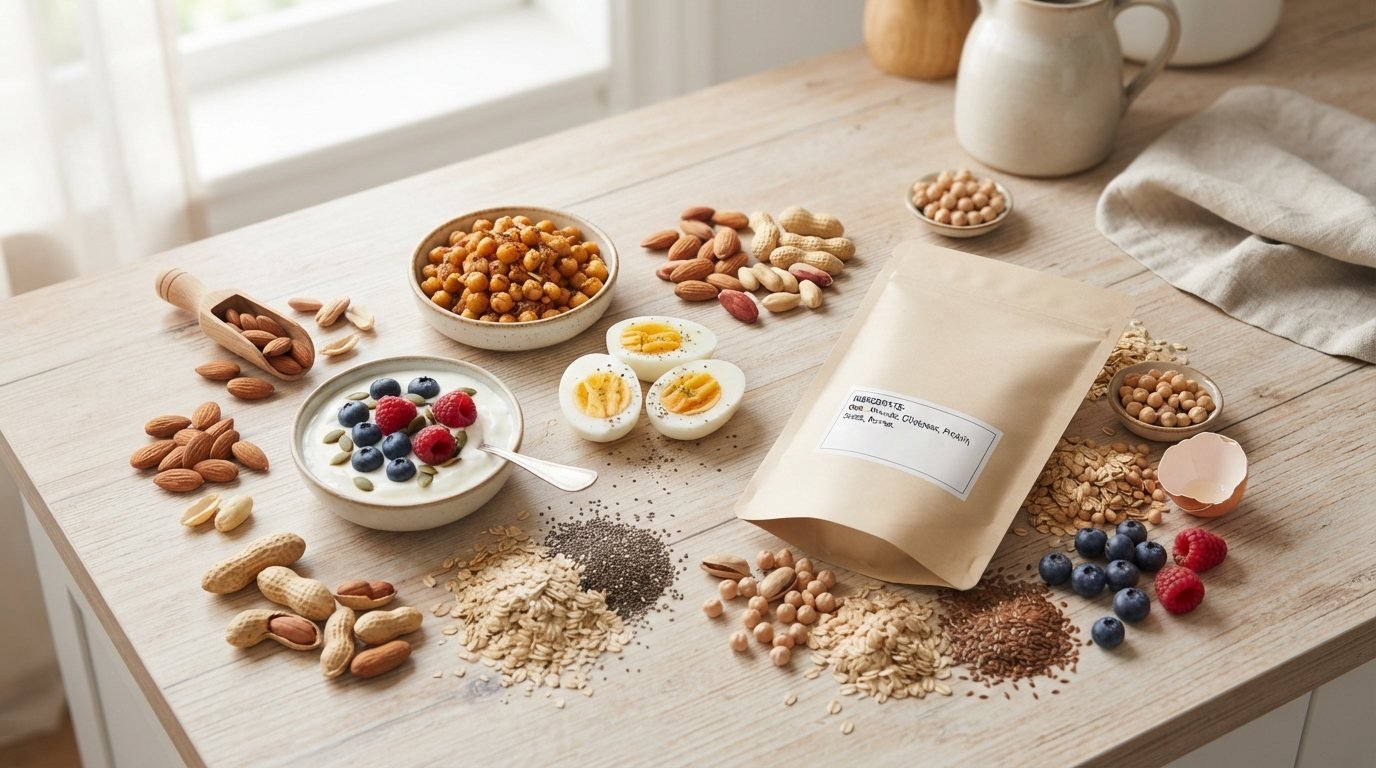
For 20 high-protein vegetarian snacks for everyday eating, useful examples to compare include Greek yogurt, cottage cheese, eggs, edamame, tofu, tempeh, lentils, and chickpeas. Put them side by side by the factor that matters most to you: preparation time, refrigeration, sweetness, savory flavor, price, ingredient simplicity or portability. That exercise makes differences visible without pretending that every option has the same purpose. If you are using a packaged product, the serving information on its label should take priority over general estimates.
How to make the options more filling
For the how to make the options more filling section of 20 high-protein vegetarian snacks for everyday eating, The strongest choices for this topic are usually the ones that are easy to repeat, simple to understand and realistic for the situation in which you will actually eat them. A useful comparison might place Greek yogurt beside cottage cheese and nuts, then ask which one fits the available time, storage and appetite instead of assuming the highest protein number is automatically the best choice. That balanced check is more repeatable than relying on marketing language, and it keeps the emphasis on foods and portions that make sense in everyday routines.
For the how to make the options more filling section of 20 high-protein vegetarian snacks for everyday eating, A practical way to think about 20 high-protein vegetarian snacks for everyday eating is to combine label information with the realities of taste, storage, portion size and the rest of the meal pattern. A useful comparison might place eggs beside edamame and skyr, then ask which one fits the available time, storage and appetite instead of assuming the highest protein number is automatically the best choice. Keeping those variables visible makes the decision more transparent and helps avoid buying a product for one feature while overlooking everything else that affects usefulness.
Budget and convenience trade-offs
For the budget and convenience trade-offs section of 20 high-protein vegetarian snacks for everyday eating, The strongest choices for this topic are usually the ones that are easy to repeat, simple to understand and realistic for the situation in which you will actually eat them. Use tofu as one reference point, then compare it with tempeh and bean dip by looking at the stated serving, the ingredient list and how much preparation or refrigeration is required. That balanced check is more repeatable than relying on marketing language, and it keeps the emphasis on foods and portions that make sense in everyday routines.
For the budget and convenience trade-offs section of 20 high-protein vegetarian snacks for everyday eating, For 20 high-protein vegetarian snacks for everyday eating, the most useful approach is to focus on the job the snack needs to do rather than chasing a single number on the front of a package. A useful comparison might place lentils beside chickpeas and cottage cheese, then ask which one fits the available time, storage and appetite instead of assuming the highest protein number is automatically the best choice. That balanced check is more repeatable than relying on marketing language, and it keeps the emphasis on foods and portions that make sense in everyday routines.
A simple decision checklist
For the a simple decision checklist section of 20 high-protein vegetarian snacks for everyday eating, The strongest choices for this topic are usually the ones that are easy to repeat, simple to understand and realistic for the situation in which you will actually eat them. Use black beans as one reference point, then compare it with hummus and tofu by looking at the stated serving, the ingredient list and how much preparation or refrigeration is required. That balanced check is more repeatable than relying on marketing language, and it keeps the emphasis on foods and portions that make sense in everyday routines.
For the a simple decision checklist section of 20 high-protein vegetarian snacks for everyday eating, A practical way to think about 20 high-protein vegetarian snacks for everyday eating is to combine label information with the realities of taste, storage, portion size and the rest of the meal pattern. A useful comparison might place milk beside soy milk and chickpeas, then ask which one fits the available time, storage and appetite instead of assuming the highest protein number is automatically the best choice. The goal is not to make every snack identical; it is to understand the trade-offs well enough to choose intentionally and adjust the portion or pairing when needed.